Warehouse efficiency depends on more than just layout and staffing. One of the most overlooked factors is how clearly and consistently your racks are labeled. Without a structured system in place, even well-organized warehouses can experience picking errors, delays, and inventory confusion.
In this guide, we’ll break down how to label warehouse racking effectively and how a well-designed pallet rack labeling system can improve accuracy, speed, and overall workflow.
What is Warehouse Rack Labeling?
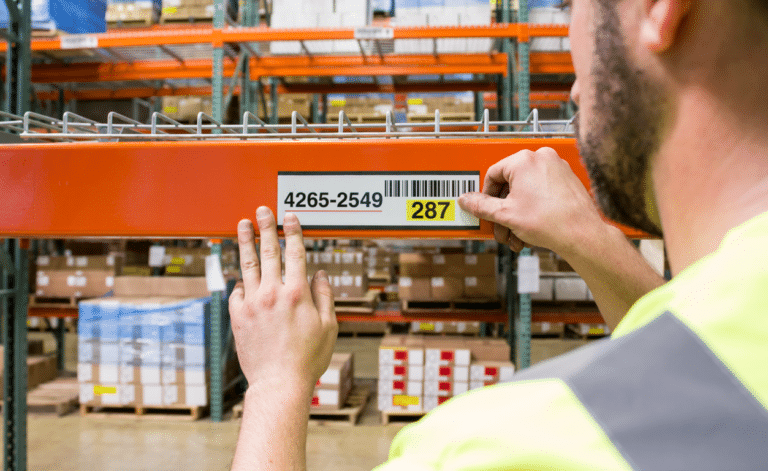
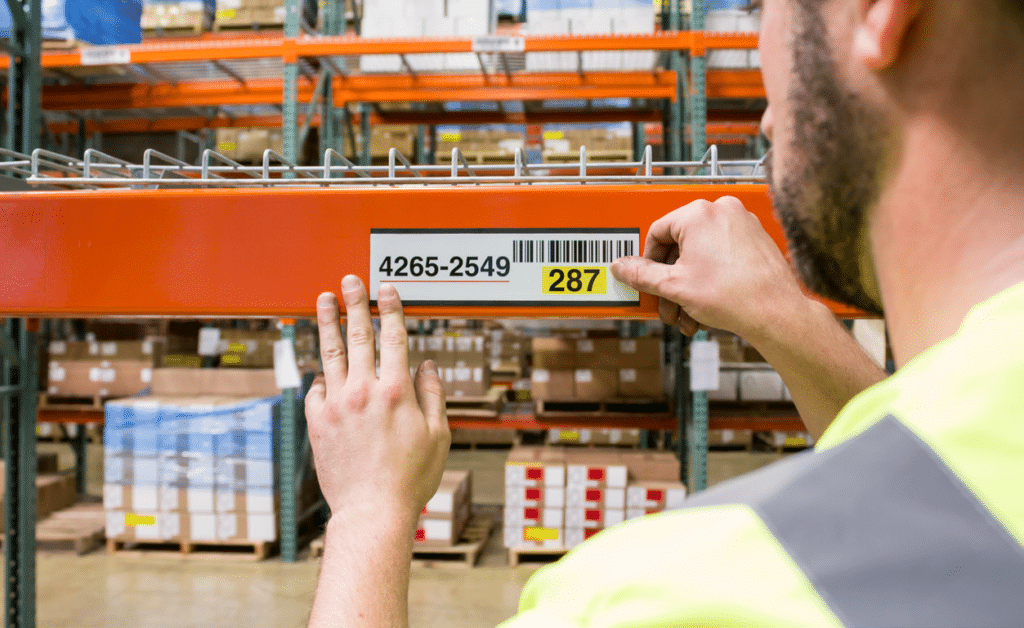
Warehouse rack labeling is the process of assigning clear, visible labels to storage locations throughout your facility. These labels help employees quickly locate items, confirm inventory positions, and complete projects more efficiently.
When done correctly, rack labeling supports:
- Faster picking and put away processes
- Reduced errors in inventory handling
- Improved visibility across warehouse operations
- Better integration with barcode scanning systems
Even small improvements in labeling can have a measurable impact on productivity and accuracy.
How Rack Labeling Improves Efficiency
Rack labeling makes warehouse work easier and faster. It helps employees quickly find items and reduces mistakes. Labels also help keep track of inventory and work well with barcode scanners, improving the overall workflow.
How to Label Warehouse Racking (Step-by-Step Guide)
Creating an effective system starts with a structured approach. Here’s how to build a labeling system that works in real warehouse environments.
Step 1: Map Your Warehouse Layout
Before applying labels, you need a clear understanding of your warehouse layout. Most facilities are organized into:
- Zones
- Aisles
- Rack sections (bays)
- Shelf levels
- Individual positions
Mapping these elements creates the foundation for a consistent labeling system.
Step 2: Create a Pallet Rack Labeling System
A pallet rack labeling system assigns a unique identifier to every storage location.
A common format looks like this:
- Zone (A, B, C)
- Aisle number
- Rack or bay number
- Level (top to bottom)
- Position
For example: “A-03-02-04.” This method ensures every location is easy to identify and scalable as your warehouse grows.
Step 3: Choose the Right Labels for Your Racks
Not all labels are built for warehouse environments. You need materials that can handle daily wear and tear, including exposure to dust, abrasion, and equipment traffic.
High-quality rack labeling solutions can help ensure long-term durability and consistent readability.
For broader applications, custom label printing solutions allow you to tailor size, material, and adhesive to your specific environment.
Step 4: Add Barcodes for Faster Scanning
Modern warehouses rely on barcode scanning to improve speed and accuracy. Adding barcodes to your rack labels allows employees to scan locations instantly rather than manually entering data.
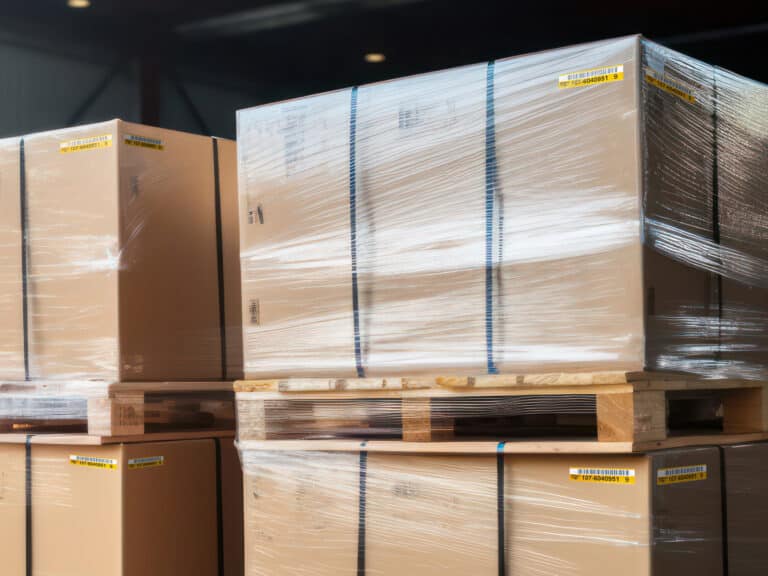
For larger inventory systems, combining rack labels with warehouse pallet labels creates a complete tracking system.
Step 5: Place Labels for Maximum Visibility
Label placement is just as important as the labeling system itself.
Best practices include:
- Position labels at eye level when possible
- Ensure visibility from forklifts and picking equipment
- Place labels where scanners can easily read them
- Avoid obstructed or hard-to-reach areas
Clear placement reduces hesitation and speeds up workflow.
Step 6: Standardize Across Your Warehouse
Consistency is key. Every rack, aisle, and zone should follow the same labeling format.
Avoid mixing styles, formats, or numbering systems, as this can lead to confusion and errors.
Step 7: Maintain and Update Labels
Over time, labels can fade, peel, or become damaged. Regular maintenance makes sure your system remains effective.
- Replace worn or damaged labels
- Audit labeling accuracy periodically
- Update labels when layouts change
Read More: What Are Freezer Grade Labels?
What Is a Pallet Rack Labeling System?
A pallet rack labeling system is a structured approach to identifying storage locations within a warehouse. It combines labels, barcodes, and numbering to create a consistent and scalable tracking system.
Main Components Include:
- Location identifiers (zone, aisle, rack, level)
- Barcode labels for scanning
- Rack labels and pallet labels
- Visual markers and signage
Together, these elements create a system that improves both navigation and accuracy.
What Are the Best Practices for Warehouse Rack Labeling?
To get the most out of your labeling system, follow these proven best practices:
- Use large, easy-to-read fonts
- Keep labeling consistent across all areas
- Choose durable materials designed for warehouse use
- Ensure barcode clarity and scannability
- Place labels where they are easy to see and access
Choosing the Right Label Materials for Warehouse Environments
Choose appropriate label materials for warehouse environments by considering these key factors.
- Temperature extremes can impact label performance, so select materials that withstand both heat and cold in your warehouse.
- Humidity and moisture exposure can cause labels to fade, peel, or lose adhesion, opt for water-resistant options to prevent deterioration.
- High-traffic areas may subject labels to abrasion and contact; choose materials that resist scuffing or scratching for longer life.
- Chemicals found in warehouses such as cleaning agents or industrial solvents can degrade some labels. Ensure your material is compatible with these substances.
Why Durability Matters
- Durable labels minimize the risk of peeling, ensuring information remains visible and accessible.
- They maintain legibility over time, which is crucial for barcode scanning and quick identification, helping reduce errors and boost warehouse efficiency.
What Are the Most Common Warehouse Rack Labeling Mistakes?
Even small mistakes can reduce efficiency. Watch out for:
- Inconsistent numbering systems
- Poor label placement
- Low-quality materials that fail over time
- Missing or unreadable barcodes
- Lack of routine maintenance
Avoiding these issues helps ensure your labeling system performs as expected.
How Better Rack Labeling Improves Warehouse Performance
An effective labeling system delivers measurable benefits across your operation.
Improvements Include:
- Faster order picking and fulfillment
- Reduced labor time
- Fewer inventory errors
- Improved tracking accuracy
- Better overall workflow efficiency
These improvements can significantly impact productivity and operational costs.
Build a Complete Warehouse Labeling System
Rack labeling is just one piece of the puzzle. A fully optimized warehouse uses multiple labeling solutions working together.
For example:
- Warehouse distribution labeling solutions support overall organization.
- Freight Pro label books help streamline shipping and documentation processes.
When these systems work together, they create a seamless flow from storage to shipping.
Choosing the Right Labeling Partner: View Our Catalog of Custom Labels
Learning how to label warehouse racking effectively is about more than just applying labels. It requires a structured system, durable materials, and a clear understanding of how your operation works. View our selection of warehouse labels, rack labels, and pallet labels. By investing in the right pallet rack labeling system, you can improve efficiency, reduce errors, and create a more organized and scalable warehouse. If you need assistance with choosing new labels for your warehouse, give our professionals a call at +1 (800) 826-8260. As an experienced Chicago label manufacturer, Chicago Tag & Label provides custom solutions designed to meet the demands of real-world warehouse environments.