When you’re tasked with figuring out how to design a label, it’s easy to get caught up in the visuals, the logos, the brand colors, and the fonts. Although in an industrial or medical setting, a pretty label that peels off in the freezer or fails to scan on the loading dock is a liability, not an asset.
At Chicago Tag & Label, we’ve spent over 75 years seeing exactly what works (and what doesn’t). We’ve learned that a great label is essentially a piece of engineering. Here are a few practical label design tips to help you build something that actually survives its environment and does its job.
Top Label Design Tips
1. Let the Environment Dictate the Material
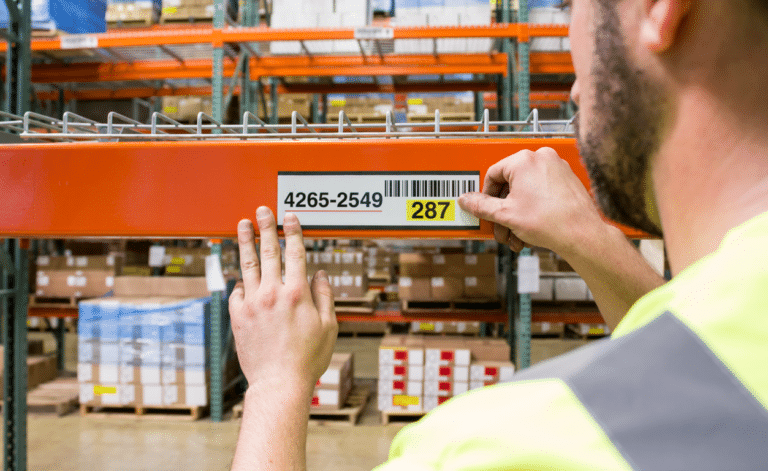
The biggest mistake people make when they first start looking into how to design a label is treating it like a standard piece of paper. If your label is going to live in a warehouse or a lab, the “where” is more important than the “how.”
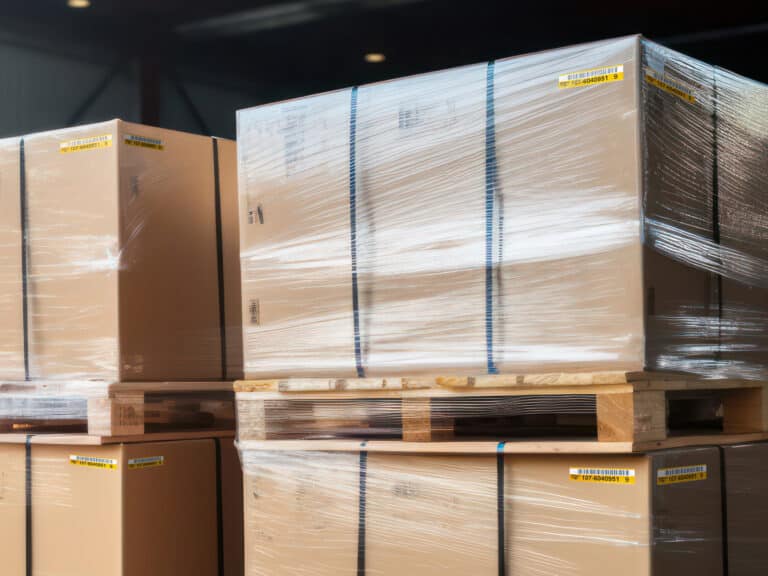
Think about the conditions. Will it be exposed to sub-zero temperatures? If so, you need freezer grade labels that stay stuck at -65°F. Will it be bumped against other pallets or exposed to chemicals? Standard ink will smudge instantly under those conditions. In those cases, one of our tips is to use a full-resin thermal transfer ribbon to ensure the data is essentially locked into the material.
2. Don’t Ignore the “Bleed” and “Safe Zones”
Nothing screams “amateur design” like a label with a sliver of white at the edge or text that’s been accidentally cut off. When you’re setting up your file, you have to account for the physical movement of the printing press.
- The Bleed: Always extend your background color 1/8″ past the actual edge of the label. If the blade shifts a hair during cutting, the color still goes all the way to the edge.
- The Safe Zone: Keep your text and logos at least 1/8″ inside the edge. This protects your critical info from being trimmed off.
3. Design for the Scanner, Not Just the Eye
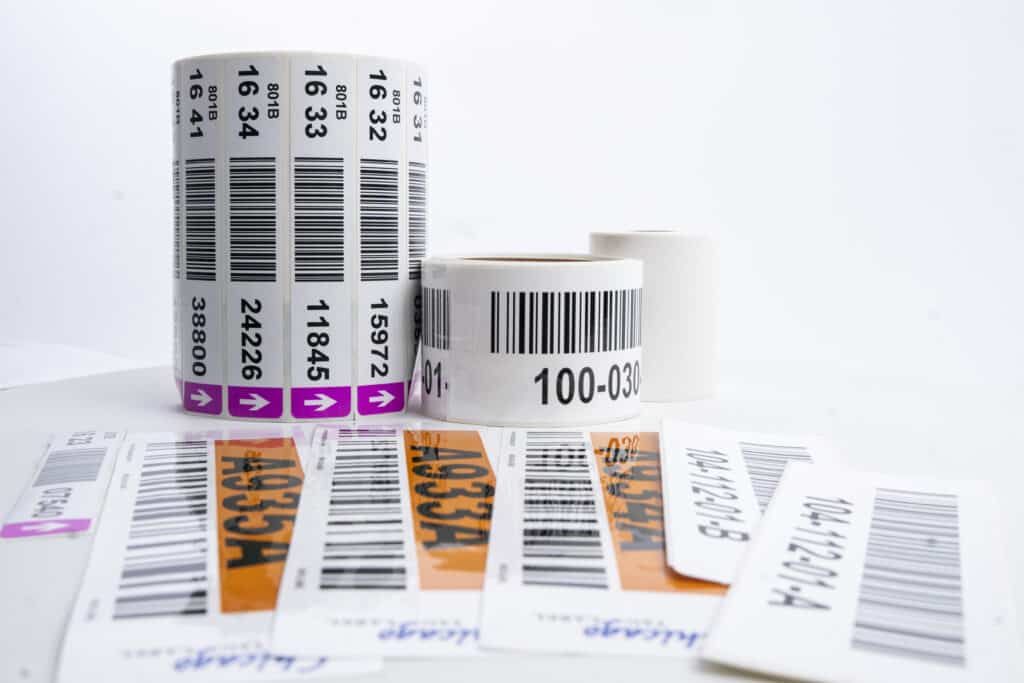
If you are designing LPN barcode labels, contrast is your best friend. A common piece of advice in any list of label design tips is to stick to black ink on a white background for barcodes. It might look “sleek” to have a barcode on a transparent or dark background, but most industrial scanners will struggle to read it.
Also, remember the “Quiet Zone,” that empty white space around the barcode. If you crowd it with text or lines, the scanner won’t know where the barcode starts, and your team will be stuck entering data by hand.
4. Choose Fonts That Can Stand the Heat (Literally)
High-speed flexographic printing is an incredible process, but it has its limits. Very thin, ornate, or “script” fonts can break up or look blurry when printed at high speeds or on textured materials.
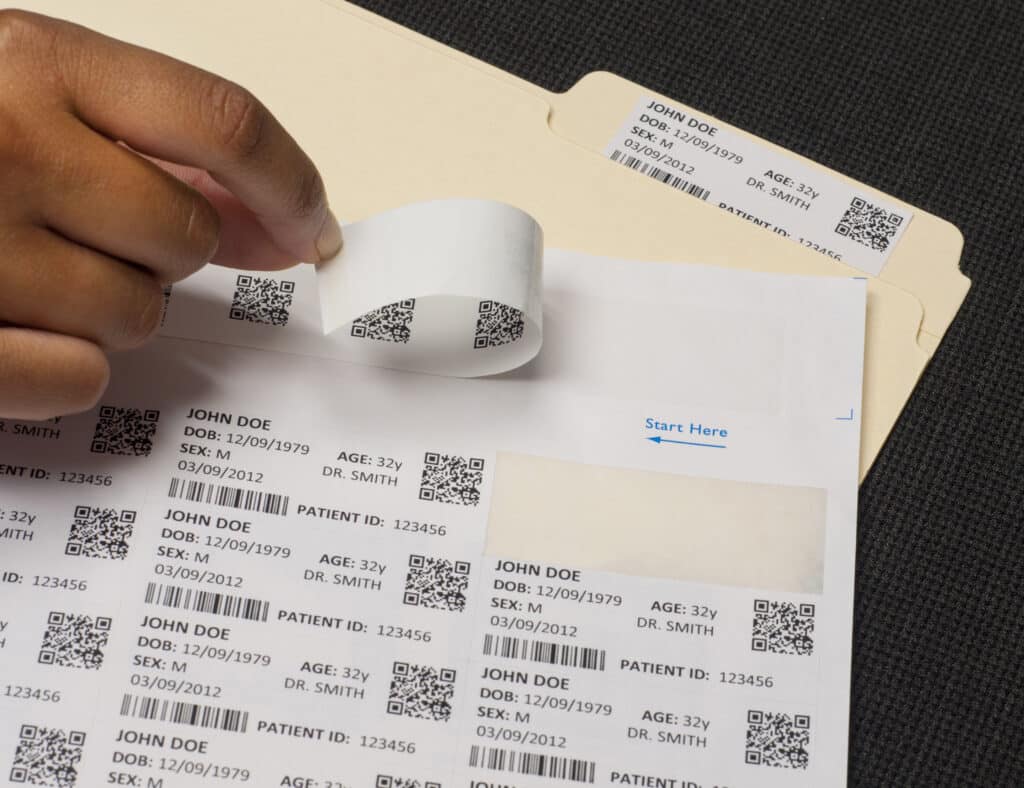
When you’re designing a label for a fast-paced environment like a hospital or a distribution center, choose clean, sans-serif fonts (like Arial or Helvetica). For medical chart labels, for example, you want the patient’s name and any alerts to be bold and readable from several feet away.
Read More: What Types of Nutritional Information Are Required on Food Labels?
5. Get the Adhesive Right the First Time
The best design is worthless if it ends up on the floor. You have to match the “stick” to the surface:
- Permanent: Use these for cardboard or metal that won’t ever need the label removed.
- Removable: Essential for retail or healthcare where you need to peel the label off without leaving a mess.
- Magnetic: Perfect for rack labeling if your inventory locations move around frequently.
6. Color: Set the Mood, but Keep It Readable
Different colors evoke different emotions and concepts, so study color theory before choosing the predominant colors of your label and see if they convey the right message. Also consider the color of any text on your label, as dark text on a dark background or light text on a light background could force your customers to squint as they read your label. Colorful labels can be eye-catching, but don’t be afraid of white space to help separate design elements.
High-Quality Custom Labels and Tags
Designing a label is a bit of a balancing act between making it look professional and making it work in the real world. You don’t need to be a graphic design expert, but you do need to be a bit of a material scientist.
If you’re stuck on the technical side of things, we’re here to help. Our team offers durable custom labels and custom tags for various types of environments. Give our professionals a call at 800-826-8260, and we’ll help you figure out the best material, adhesive, and layout to make sure your project is a success.