Shipping Labels: A Full Guide
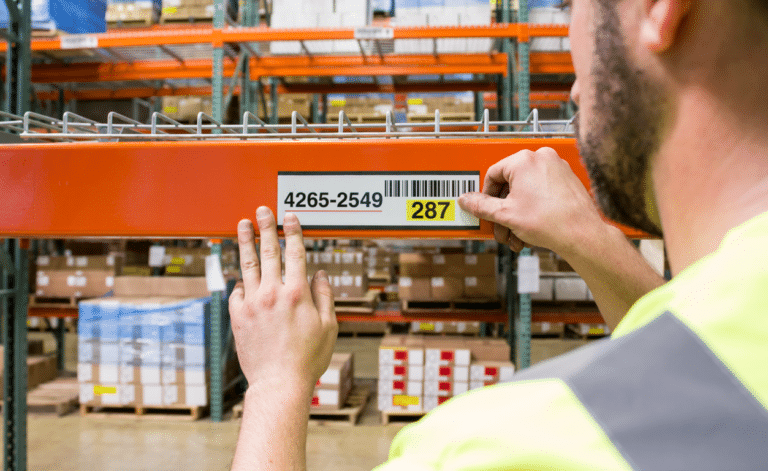
A shipping label may look like a simple sticker on the outside of a package, but it plays a major role in getting that package from one location to another. It tells the carrier where the package is going, how it should be shipped, how it should be tracked, and which barcode should be scanned along the way.
If you are asking what is a shipping label?, the simple answer is this: a shipping label is a printed label attached to a package that includes the information a carrier needs to route, track, and deliver it.
For businesses that ship products every day, shipping labels are more than a basic requirement. They help support order accuracy, fulfillment speed, barcode scanning, package tracking, and customer delivery visibility.
How Do Shipping Labels Work?
If you are wondering how do shipping labels work?, think of the label as the package’s instruction sheet. It connects the package to the shipment data inside a carrier, warehouse, or fulfillment system.
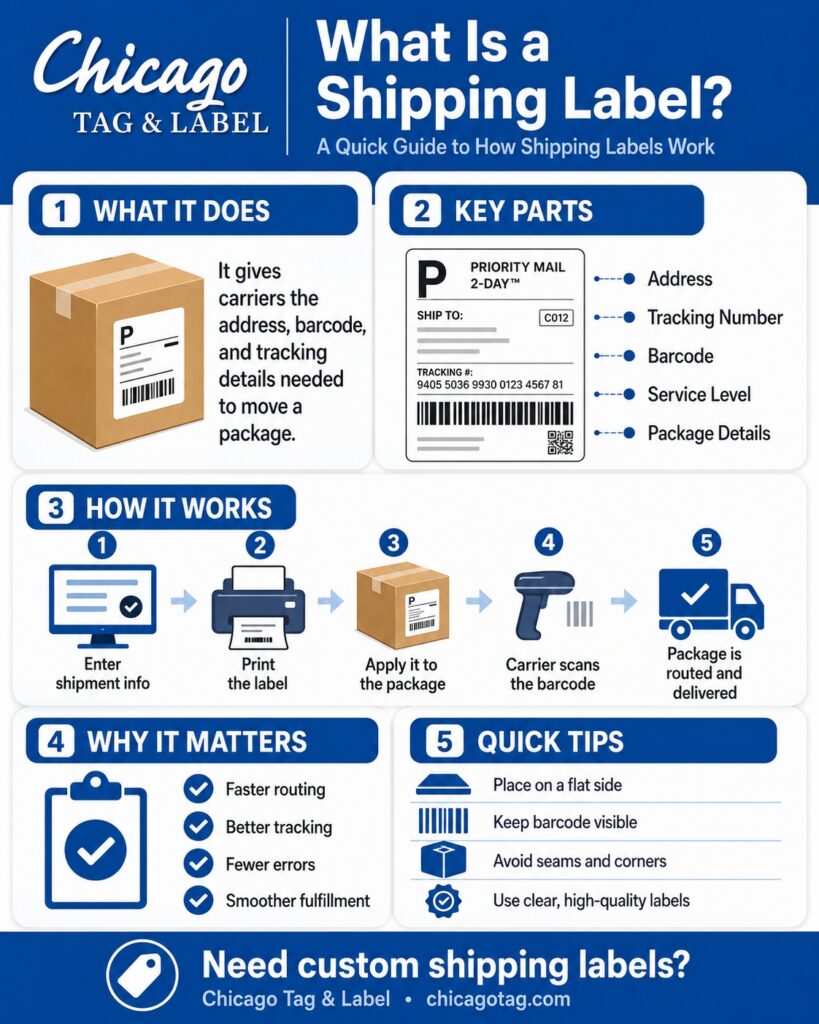
Here is the basic process:
- Shipment details are entered into a shipping platform, carrier website, warehouse system, ERP, or eCommerce system.
- The system generates a shipping label with the correct address, barcode, tracking number, service level, and routing information.
- The label is printed.
- The label is applied to the package.
- The carrier scans the barcode.
- The package is sorted, routed, transported, and scanned at different points.
- Tracking updates are recorded as the package moves.
- The package is delivered to the recipient.
Each scan helps update the package’s status and location. This is why barcode clarity is so important. If the barcode is damaged, distorted, covered, or printed poorly, the package may need manual handling, which can slow down the shipping process.
What Information Is on a Shipping Label?
A shipping label includes the details needed to identify, route, scan, and deliver a package. The exact layout can vary by carrier, shipping software, country, and service level, but most shipping labels include the same core information.
A shipping label may include:
- Recipient name and address
- Return address
- Carrier name
- Tracking number
- Shipping barcode
- QR code, in some cases
- Service level
- Package weight
- Routing information
- Postal code or zone information
- Order number or reference number
- Package identifiers
- Special handling instructions, if needed
Common Types of Shipping Labels
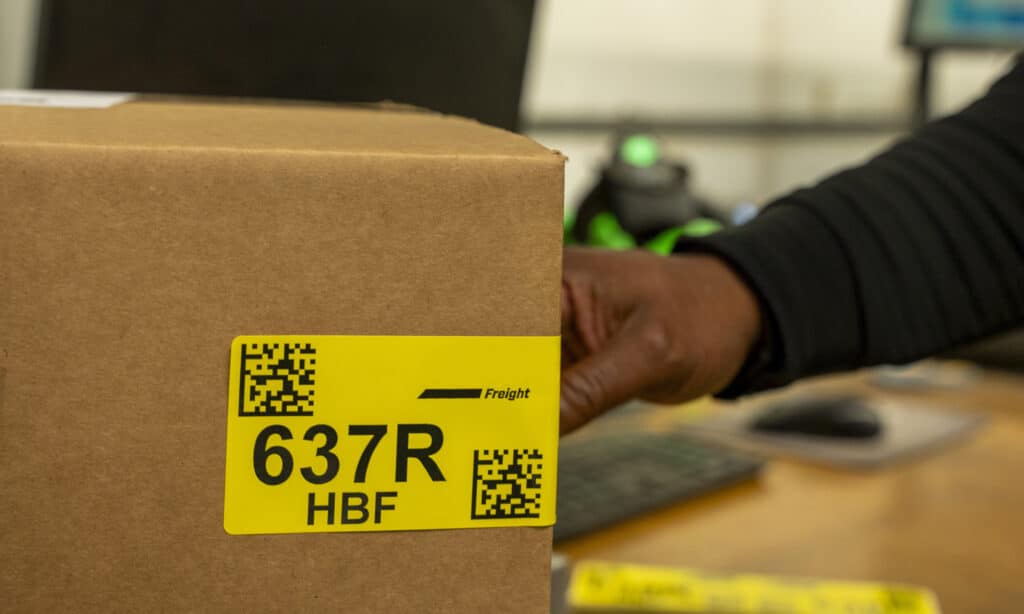
Shipping labels come in several forms depending on the package, carrier, workflow, and business need.
Standard Shipping Labels
Standard shipping labels are used for basic parcel shipping. They usually include the recipient address, return address, tracking number, barcode, service level, and routing details.
One of the most common formats is the 4″ x 6″ shipping label, which is widely used with thermal label printers.
Barcode Shipping Labels
Barcode shipping labels are designed to support fast scanning and package tracking. The barcode helps carriers, warehouses, and fulfillment systems identify the shipment without manually typing in the tracking number.
For applications where barcode durability and scan accuracy matter beyond basic parcel shipping, Chicago Tag & Label also manufactures industrial barcode labels for warehouses, manufacturing, asset tracking, and harsh environments.
Return Shipping Labels
A return shipping label allows the recipient to send a package back. These are common in eCommerce, warranty, repair, replacement, and exchange workflows.Return labels may be included inside the package, printed by the customer, or sent digitally through a returns portal.
International Shipping Labels
International shipping labels may require more information than domestic labels. Depending on the shipment, carrier, destination, and product type, additional customs or export documentation may be needed. Businesses should always follow the requirements of the carrier and destination country when shipping internationally.
Multi-Layer Shipping Labels
Multi-layer shipping labels, or label-over-label, are used when a shipment requires more than a standard carrier label. These labels may include a shipping label, packing list, return label, gift message, invoice, or other document in one label construction.
Our custom Multiplex™ enclosed packing list labels are designed for businesses that want to combine shipping labels and supporting documents while reducing separate pouches, envelopes, and matching steps.
What Size Is a Shipping Label?
A 4″ x 6″ shipping label is one of the most common shipping label sizes. It provides enough space for the address, barcode, tracking number, carrier details, and routing information while fitting many thermal label printers.
However, shipping label size can vary based on the carrier, printer, software, package type, and workflow. Some businesses may need custom label sizes or formats to support unique packaging, automation, or documentation needs.
If your business needs a label that fits a specific printer, package, or shipping process, Chicago Tag & Label can help with custom shipping labels built around your workflow.
How Are Shipping Labels Printed?
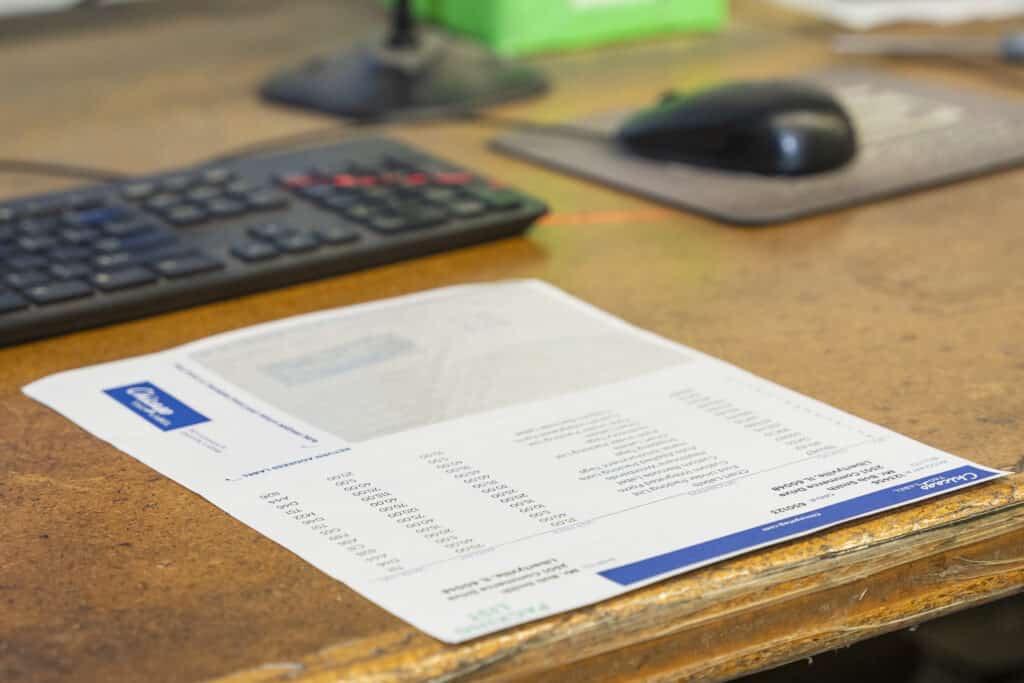
Shipping labels can be printed in different ways, but many business shipping labels are printed using thermal printers. Thermal printing is popular because it is fast, efficient, and well suited for barcode labels.
Direct Thermal Shipping Labels
Direct thermal labels do not require a ribbon. The image is created on heat-sensitive material. These labels are commonly used for short-term shipping and parcel applications because the label usually only needs to stay readable through the delivery process.
Thermal Transfer Shipping Labels
Thermal transfer labels use a ribbon to create the printed image. This can provide more durability depending on the label material, ribbon, and application.
Thermal transfer may be helpful when labels need better resistance to smudging, abrasion, moisture, chemicals, handling, or longer-term use. Chicago Tag & Label offers thermal solutions for businesses that need direct thermal labels, thermal transfer labels, ribbons, and related label materials.
Print-and-Apply Shipping Labels
In high-volume shipping environments, labels may be printed and applied automatically. Print-and-apply systems can help improve speed, consistency, and placement for cartons, packages, and products moving through fulfillment or distribution lines.
Chicago Tag & Label supports automated label printing solutions for businesses that need label workflows designed around speed, accuracy, and efficiency.
Where Should You Place a Shipping Label on a Package?
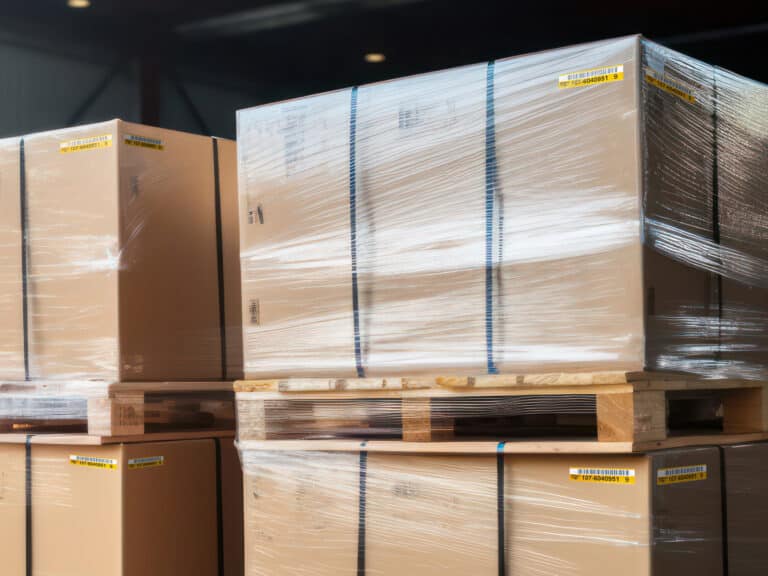
Shipping label placement matters because the label needs to be easy to scan and read. A clear label in the wrong place can still cause problems if the barcode is bent, covered, wrinkled, or wrapped around an edge.
Best practices for shipping label placement include:
- Apply the label to the largest flat side of the package.
- Keep the barcode smooth and uncovered.
- Avoid placing labels over box seams.
- Do not wrap the barcode around corners.
- Keep the label away from heavy tape, straps, or shrink wrap.
- Make sure the address and tracking number are readable.
- Follow carrier instructions when specific placement is required.
A scannable barcode helps the carrier move the package through the system faster and with fewer manual steps.
Common Shipping Label Mistakes to Avoid
Shipping label problems can lead to delays, missed scans, returns, or manual processing. Many of these issues are preventable with the right label, printer settings, placement, and data.
Common shipping label mistakes include:
- Incorrect recipient address
- Missing return address
- Wrong service level
- Poor barcode print quality
- Wrinkled or damaged label
- Label placed over a seam or corner
- Barcode covered by tape
- Wrong label size
- Mismatched shipping label and packing slip
- Label printed too light or too dark
- Label applied to the wrong package
For businesses shipping at scale, label accuracy is part of fulfillment accuracy. Clear print quality, reliable materials, correct sizing, and consistent placement can help reduce shipping problems.
Shipping Label vs. Packing Slip: What Is the Difference?
A shipping label and a packing slip are not the same thing.
A shipping label goes on the outside of the package and helps the carrier route, track, and deliver it. A packing slip usually lists what is inside the package and may be placed inside the box or inside an enclosed pouch.
A simple way to think about it is this: A shipping label helps the carrier move the package. A packing slip helps the recipient, warehouse, or business confirm what is inside the package.
Some workflows need both. For example, an eCommerce order may need a carrier label on the outside and a packing slip inside the package. Other shipments may also need a return label, gift message, invoice, or additional paperwork.
For businesses that want to reduce separate document handling, Multiplex™ enclosed packing list labels can help combine shipping labels with related documents in a more efficient format.
When a Standard Shipping Label Is Not Enough
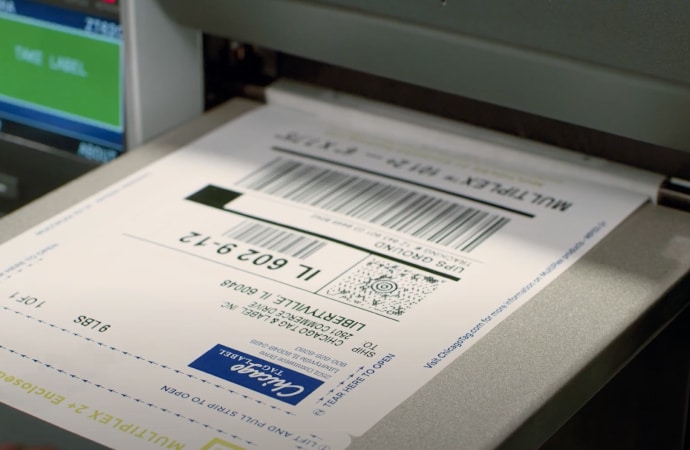
A standard shipping label is enough for many packages, but some workflows need more information, more durability, or a more efficient document process.
A standard shipping label may not be enough when a package also needs:
- A packing list
- A packing slip
- A return label
- A gift message
- An invoice
- Customer paperwork
- Order details
- Additional shipping documents
This is where multi-layer shipping labels, or label-over-label, can be helpful. Instead of using a separate pouch, envelope, or document-matching process, a multi-layer label can combine important shipping and order documents into one label format.
Chicago Tag & Label offers manually applied Multiplex™ labels for businesses that want a practical way to combine shipping labels with packing lists, return labels, gift messages, or other order documents.
Custom Shipping Labels From Chicago Tag & Label
Shipping labels need to do more than stick to a box. They need to print clearly, scan reliably, fit the package, support your printer, and match your shipping workflow.
Chicago Tag & Label manufactures custom shipping labels for businesses that need dependable label performance. Our team can help with thermal shipping labels, barcode labels, 4″ x 6″ labels, custom sizes, adhesives, label materials, automated labeling, and Multiplex™ enclosed packing list labels.
If your business needs shipping labels, thermal labels, barcode labels, or multi-layer shipping label solutions, contact Chicago Tag & Label by phone at (800) 826-8260 to discuss your project.
FAQs About Shipping Labels
What is a shipping label?
A shipping label is a printed label attached to a package that includes the information a carrier needs to route, track, and deliver the package. It is the label that identifies the shipment and helps move it through the delivery process.
How do shipping labels work?
Shipping labels work by carrying human-readable and machine-readable information. Carriers scan the barcode to sort, route, track, and deliver the package. The barcode is one of the most important parts because it connects the physical package to digital tracking data.
What information is included on a shipping label?
A shipping label may include the recipient address, return address, tracking number, barcode, carrier name, service level, package weight, routing information, and order reference number.
What is the standard shipping label size?
One of the most common shipping label sizes is 4″ x 6″, especially for thermal shipping labels. Other sizes may be used depending on the carrier, printer, software, package, and business workflow.
Can I print shipping labels with a thermal printer?
Yes. Many businesses print shipping labels with direct thermal printers because they are fast and efficient for short-term shipping labels. Some applications may use thermal transfer printing when more durability is needed.
What is the difference between a shipping label and a packing slip?
A shipping label goes on the outside of the package and helps the carrier deliver it. A packing slip usually lists the items in the order and may be placed inside the package or inside an enclosed pouch.
What happens if a shipping label barcode does not scan?
If the barcode does not scan, the package may need manual processing. This can slow down routing and delivery. Clear print quality, proper placement, and durable label materials help reduce scanning issues.
Can shipping labels include packing slips or return labels?
Standard shipping labels usually include carrier information, tracking data, and routing details. Multi-layer labels, such as Multiplex™ labels, can help combine shipping labels with packing lists, return labels, gift messages, invoices, or other documents.