Choosing the right standard hang tag size can make a big difference in how your product looks, feels, and functions. A hang tag needs to be large enough to hold important information, but not so large that it overwhelms the product. It should fit the item, support your branding, and give customers the details they need at a glance.
For many retail and apparel products, one of the most common hang tag sizes is 2″ x 3.5″. This size offers enough room for a logo, product name, price, barcode, QR code, or short message while still keeping the tag easy to handle. However, the best size depends on your product, the amount of information you need to include, and how the tag will be attached.
At Chicago Tag & Label, we manufacture custom tags for a wide range of business needs. Whether you need a simple retail hang tag, a durable industrial tag, or a custom printed solution with barcodes or variable data, choosing the right size is an important first step.

What Is the Standard Hang Tag Size?
A standard hang tag size is a commonly used tag dimension that works well for many products and applications. These sizes are popular because they are practical, easy to design around, and familiar to customers.
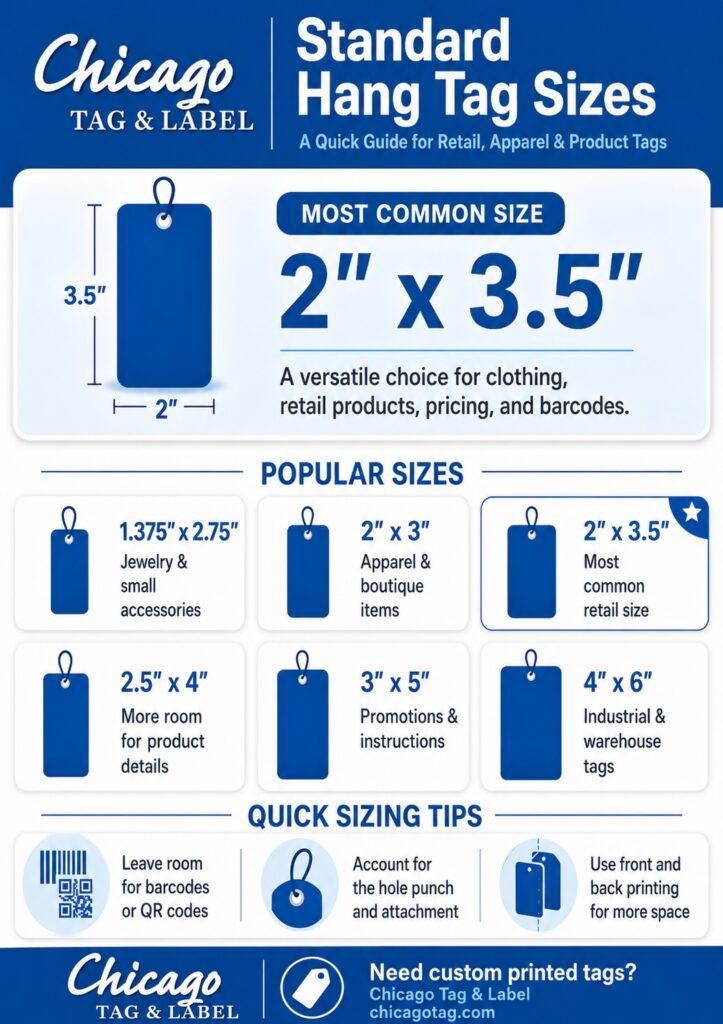
While there is not one single size that works for every project, common hang tag sizes include:
| Hang Tag Size | Best For | Notes |
| 1.375″ x 2.75″ | Jewelry, accessories, small retail items | Compact and lightweight |
| 2″ x 3″ | Apparel, boutique products, small packaging | Good for simple branding and pricing |
| 2″ x 3.5″ | Clothing, retail products, general merchandise | One of the most common and versatile sizes |
| 2.5″ x 4″ | Apparel, gifts, premium retail items | More room for product details |
| 3″ x 5″ | Larger retail products, instructions, promotions | Better for readability and more content |
| 4″ x 6″ | Industrial products, warehouse tags, equipment tags | Useful for visibility, tracking, and warnings |
These standard hang tag sizes are a helpful starting point, but they are not the only options. Many businesses choose custom tag sizes when they need a unique shape, special fit, additional printing space, or a more durable format.
Standard Clothing Tag Size: What Works Best for Apparel?
When people are looking for standard clothing tag sizes, they are often looking for hang tags used on shirts, jackets, jeans, uniforms, accessories, and other apparel products. For clothing, the tag should look proportional to the garment while still leaving room for the information a shopper needs.
Common clothing hang tag sizes include:
- 2″ x 3″
- 2″ x 3.5″
- 2.5″ x 4″
A smaller tag may work well for children’s clothing, accessories, or lightweight garments. A larger tag may be better for outerwear, premium apparel, workwear, or products that need more detailed information.
Clothing hang tags often include:
- Brand name and logo
- Product name or style number
- Size
- Price
- Barcode or QR code
- Material or care details
- Country of origin
- Website or social media information
- Sustainability or certification messaging
If your clothing tag needs a barcode or QR code, it is important to choose a size that allows the code to scan clearly. Businesses using barcode labels, inventory tracking, or thermal printing may also want to explore Chicago Tag’s thermal solutions for related printing needs.
Hang Tags vs. Clothing Labels
Hang tags and clothing labels are not the same thing. A hang tag is a removable tag that is attached to a product with string, wire, ribbon, elastic cord, or a plastic fastener. It is often used for branding, pricing, product information, or retail presentation.
A clothing label is usually sewn in, heat applied, or permanently attached to the garment. Clothing labels may include size, care instructions, fabric content, or brand information.
Read More: What Are Hang Tags Used For?
How to Choose the Right Standard Tag Size
A good hang tag should be practical, easy to read, and appropriate for the product. Before choosing a size, think through how the tag will be used from production to the point of sale.

Use this simple process when choosing a standard tag size:
- Decide what information needs to fit on the tag.
- Consider the size and shape of the product.
- Choose a tag size that is easy to read.
- Leave room for a barcode or QR code if needed.
- Account for the hole punch, string, wire, ribbon, or fastener.
- Think about the material and durability requirements.
- Decide whether a standard size or custom size is the better fit.
If the tag only needs a logo and price, a smaller size may work well. If the tag needs product details, instructions, tracking information, or a QR code, a larger size may prevent the design from feeling crowded.
Design Details That Affect Hang Tag Size
The printed size of the tag is only part of the decision. You also need to think about layout, readability, artwork setup, and how the tag will be attached.
Bleed and Safe Area
Printed tags need proper artwork setup. Bleed allows the design to extend beyond the trim edge so there are no unwanted white borders after cutting. The safe area keeps important text, logos, barcodes, and QR codes away from the edge of the tag.
If your design has a border, small type, or detailed artwork, you may need a larger tag size to keep everything clean and readable.
Hole Placement
Most hang tags include a punched hole for string, wire, ribbon, or another attachment method. The hole takes up usable design space, so it should be planned before the artwork is finalized.
Common hole placements include:
- Top center
- Top left
- Top right
- Side placement
- Custom placement
Keep important text and graphics away from the hole. This helps prevent the design from being cut off and reduces the risk of tearing around the attachment point.

Font Size and Readability
A small tag can look polished, but it can quickly become difficult to read if it includes too much information. If you need small text, product details, tracking numbers, or compliance information, choose a standard hang tag size that gives the design enough breathing room.
For scannable elements, follow trusted guidance on barcode standards so the printed code is large enough and clear enough to work properly.
Front and Back Printing
Printing on both sides can help you use space more efficiently. For example, the front of the tag can focus on branding while the back includes price, barcode, QR code, product details, care notes, or website information.
Double-sided printing can make a smaller tag more practical, especially for apparel and retail products.
Standard vs. Custom Hang Tag Sizes
A standard hang tag size is a good fit for many projects, but it is not always the best choice. Custom sizing may be better when your tag needs to fit a specific product, include extra information, or stand out on the shelf.
| Option | Best For | Benefits |
| Standard Hang Tag Size | Common retail, apparel, and product tags | Familiar format, practical sizing, easy to design |
| Custom Hang Tag Size | Specialty products, industrial uses, unique branding, detailed information | Better fit, more flexibility, stronger product presentation |
Custom hang tags can be especially useful for:
- Retail packaging
- Clothing and apparel
- Industrial products
- Warehouse and inventory tags
- Equipment tags
- Warning or instruction tags
- Promotional tags
- Product launch materials
- Tags with barcodes or QR codes
- Tags that need specialty holes, wires, strings, or fasteners
Chicago Tag & Label manufactures custom printed tags for a wide range of industries and applications. Our team can help you select the right size, material, printing format, and finishing details for your project.
Read More: What Is a Standard 4 x 6 Shipping Label?
Common Mistakes When Choosing a Hang Tag Size
The wrong tag size can create design problems, scanning issues, or a poor product presentation. Here are a few common mistakes to avoid:
- Choosing a tag that is too small for a barcode or QR code
- Placing important text too close to the hole punch
- Using a tag that overwhelms a small product
- Forgetting to account for strings, wires, ribbons, or fasteners
- Trying to fit too much information on one side
- Choosing a material that is not durable enough for the use environment
- Not testing the tag on the actual product before finalizing the order
A good tag should feel like it belongs with the product. It should be easy to read, easy to attach, and strong enough for the way it will be used.
Order Custom Hang Tags From Chicago Tag & Label
Choosing the right standard hang tag size is easier when you work with a team that understands custom printed products. Chicago Tag & Label has been helping businesses with quality printed labels, tags, forms, and specialty solutions since 1946.
We can help with standard and custom tag sizes, material selection, printing options, hole placement, barcode needs, and finishing details. Whether you need retail hang tags, apparel tags, product tags, industrial tags, or other custom printed solutions, our team is ready to help.
Explore our full range of retail hang tags and custom tags and contact Chicago Tag & Label by phone at +1 (800) 826-8260 to receive support.
Frequently Asked Questions
What is the most common standard hang tag size?
One of the most common standard hang tag size options is 2″ x 3.5″. It is popular for clothing, retail products, and general merchandise because it offers enough room for branding, product details, pricing, barcodes, or QR codes without being too large.
What is the best size for a hang tag with a barcode?
A hang tag with a barcode usually needs enough open space for the code to scan clearly. Sizes such as 2″ x 3.5″ or 2.5″ x 4″ often work well, depending on the amount of other content included on the tag.
Can hang tags be custom sizes?
Yes. Hang tags can be produced in custom sizes to fit unique products, special packaging, industrial applications, or detailed product information. Custom sizing is often helpful when a standard size does not provide the right fit or enough usable space.
What size hole should a hang tag have?
The hole size depends on the attachment method, material, and application. A tag used with string or ribbon may need a different hole size than a tag used with wire or a plastic fastener. The design should also leave enough room around the hole so the tag does not tear or interfere with printed content.
Are standard tag sizes better than custom tag sizes?
Standard tag sizes are practical for many projects, but custom sizes may be better when the tag needs a unique shape, special fit, barcode, QR code, instructions, or durable material. The best choice depends on how the tag will be used