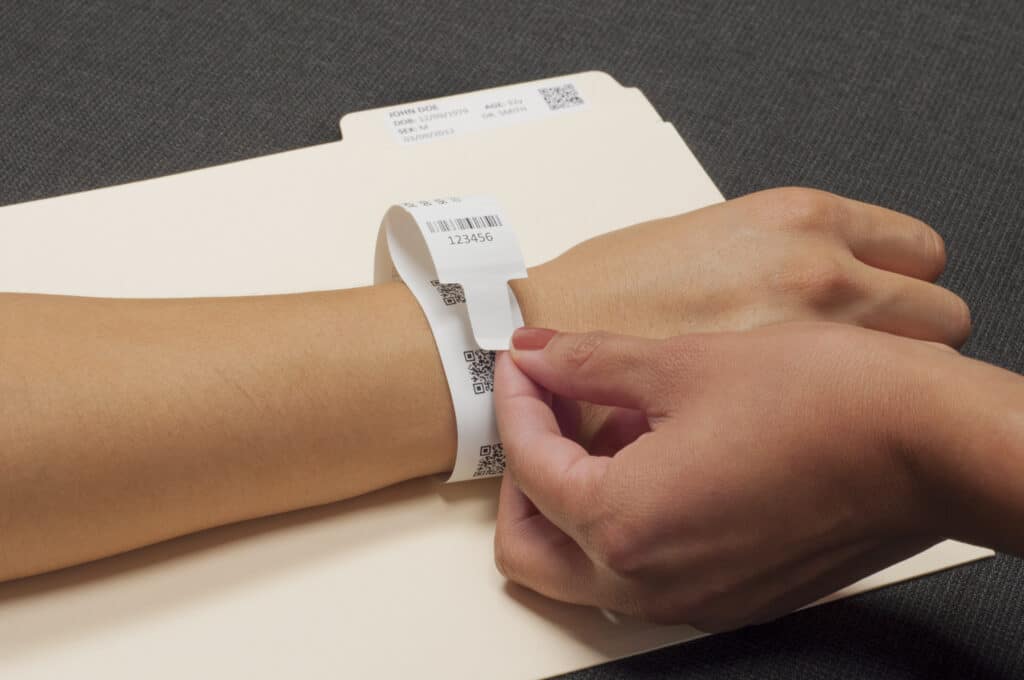
A hospital wristband is more than just an accessory. It is a necessary piece of medical equipment that can save lives and dramatically reduce medical errors. When choosing a hospital wristband, you need to make sure you get one that is worth the cost and improves efficiency so your patient and your budget can benefit. These are 6 features to look for in a hospital wristband:
1. Color coding
If you are concerned about patient safety, color coding is imperative when choosing medical wristbands. Once your hospital settles on its color-coding system, either its own or a more standard local or state one, make sure the wristbands you choose come in the colors you need. Example hospital wristband colors include red to indicate DNR, purple to indicate allergy to latex, blue to indicate other allergies, and green to alert medical staff to fall risk.
2. Easy printing
Whether your medical center is in a major metropolitan area or you are running a small local hospital, you have many patients each day. Neither the staff nor your patients can afford for printing wristbands to be a big deal. Sheets of chart labels should come in standardized sizes so you can print them as needed using regular laser printers. Medical staff should easily be able to add the necessary information, whether that is patient demographics, medical conditions, or hospital logo. After printing, just peel off the label and stick it onto the wristband.
3. Durability
Durable wristbands save time and money. They also encourage proper use of wristbands, since patients and medical staff can be more likely to take off or forget to replace wristbands when they are constantly falling apart. Wristbands should be resistant to water and alcohol, which are commonly present in hospital settings. In addition, durable wristbands promote proper hygiene and sanitation because they are resistant to cleaning solutions and soaps.
4. Comfort
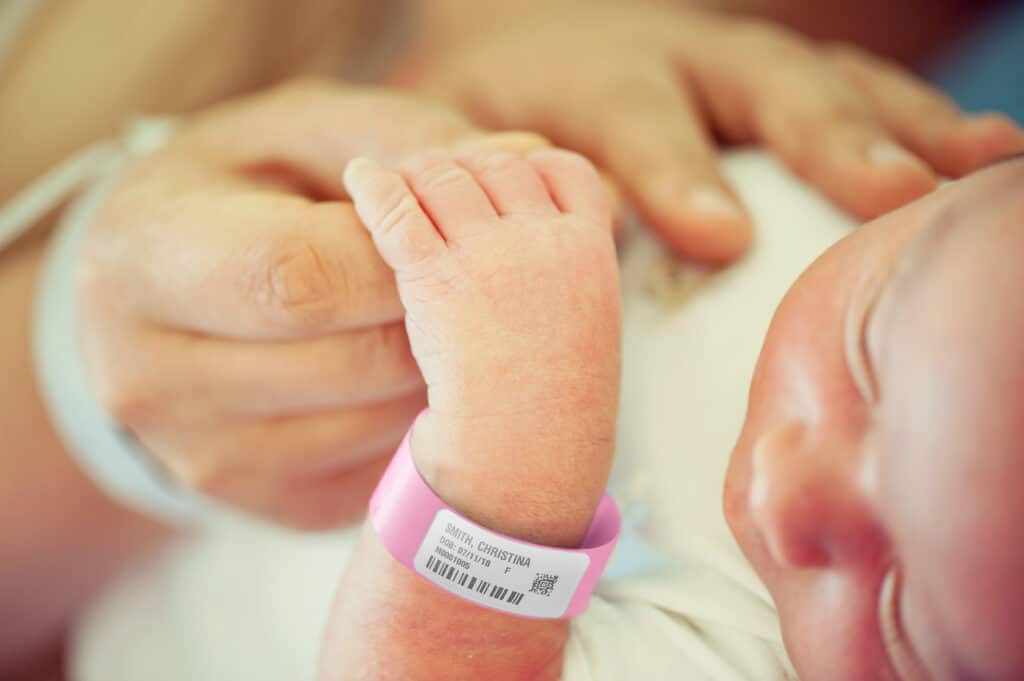
Patients have enough to worry about when they are in the hospital trying to get healthy. They do not need scratchy or irritating wristbands to add to their concerns. Polyester wristbands can be less irritating to patients’ skin, and they are not too hard or heavy.
5. Size
The right size is another characteristic of a good hospital wristband. Bands should be in the appropriate size for each patient, whether adult, pediatric or infant. In the neonatal unit, wristbands can come in adult-infant pairs to ensure correct pairing.
6. Efficiency
Time is money, and in a hospital setting, it is also patient health. Hospital wristbands need to promote efficiency. Nurses need to be able to quickly reorder wristbands and their accompanying labels, or have them shipped automatically at pre-determined intervals. In addition, labels need to be easily peeled off their sheets and applied to the wristbands. This efficiency allows medical staff to spend time with more important matters, such as tending to patients.
Durable Medical and Hospital Wristbands
The right wristband can make patients safer and improve hospital efficiency. Do you need assistance choosing hospital wristbands or labels? Contact our staff at (800) 826-8260 to receive assistance. Our team offers various types of high-quality hospital labels such as medical color-coded patient wristbands, medical chart labels, and medication labels. Our professionals are committed to working with you to improve efficiency and safety.