Barcode labels play a crucial role in warehouse operations. They support accurate inventory counts, speed up order processing, and help teams keep supply chains on track. A well-designed barcode label system will reduce wasted time, prevent mistakes, and ensure products move smoothly from receiving to shipping.
At Chicago Tag & Label, we know how important barcode labels are for efficient inventory control. It’s a tool that keeps your operation moving. From warehouse floors to retail shelves, our custom labels are designed to perform under pressure, so your team spends less time troubleshooting and more time fulfilling orders.
What Are Barcode Labels?
A barcode label that carries scannable information about a product, location, or item. When scanned, it instantly communicates data to a warehouse management system, eliminating the need for manual entry.
Types of Barcodes
- 1D barcodes are the traditional horizontal lines that hold basic data, such as product numbers or SKUs.
- 2D barcodes (like QR codes) store much more information in a smaller space, often used for detailed tracking or compliance needs.
Common Materials
Barcode labeling comes in different formats depending on use. Adhesive paper labels work well for short-term or light-duty applications. Softer, hypoallergenic materials are used for items like patient ID wristbands. Synthetic labels can withstand harsh conditions like cold storage or heavy handling, so data remains scannable even under stress.
Encoding Standards
From UPC to Code 128 to DataMatrix, barcode label formats follow international standards so they can be used across systems and trading partners.
Benefits of Barcode Labels in Warehouse Operations
Barcode labeling can directly impact how efficiently a warehouse runs. The advantages include:
- Increased inventory accuracy – Scannable inventory barcodes reduce miscounts and keep stock levels precise.
- Faster picking and packing – Teams can scan items quickly, speeding up fulfillment while cutting down on search time.
- Reduction in human error – Manual data entry is one of the most common sources of mistakes; barcode labels replace that with reliable scans.
- Improved traceability and compliance – Every scan creates a digital trail, making it easier to meet regulatory requirements or customer audits.
- Enhanced supply chain visibility – Warehouse barcode systems provide real-time insights that support better planning, forecasting, and reporting.
Read More: 5 Benefits of Investing in Linerless Labels
Where Barcode Labels Are Used in a Warehouse Environment
Barcode labels appear across nearly every part of a warehouse. They provide order and ensure products are always easy to find.
Common applications include:
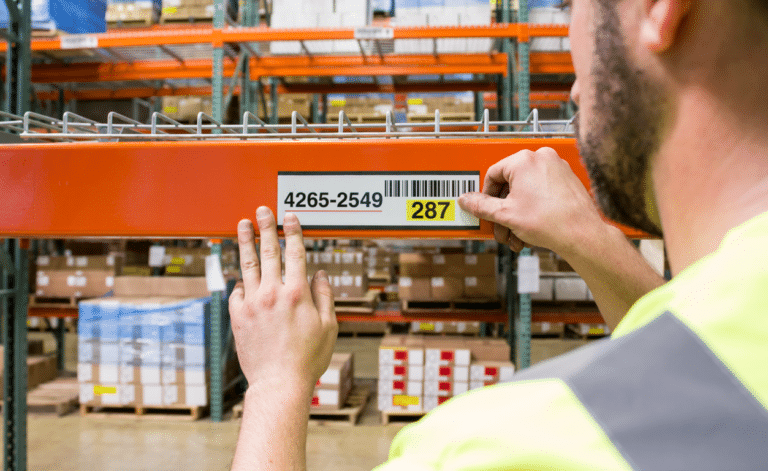
- Shelf labels and bin labels keep small items and parts organized and quickly scannable.
- Rack labels and zone identification identify aisles, zones, and storage areas for faster navigation.
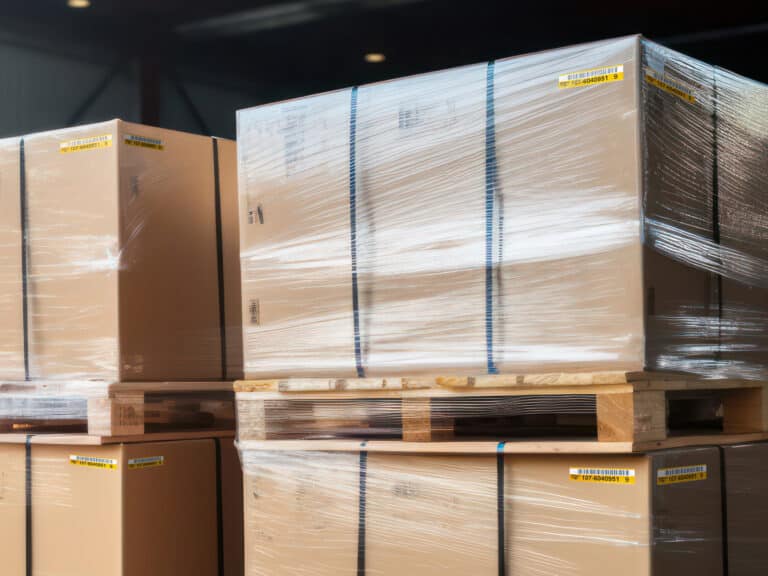
- Pallet and product labels track goods at both the pallet and item level, improving movement across receiving, storage, and shipping.
- Apply a warehouse label to critical tools, scanners, or equipment to track and monitor use and reduce loss.
These uses create a warehouse environment where every item, location, and tool can be identified and tracked.

Best Practices for Barcode Label Implementation
The most effective barcode labeling depends on following a few guidelines:
- Label placement – Position labels where scanners can easily read them, at consistent heights and angles across racks and bins.
- Barcode sizing and scan distance – Match barcode size to the expected scanning range. Larger barcodes suit long-range scanners, while smaller ones work well for handheld devices.
- Material durability – Select label materials based on conditions. For example, synthetic stocks perform better in cold storage or dusty areas than standard paper.
- Print technology – Choose between thermal transfer (long-lasting, resistant to fading) and direct thermal (cost-effective for short-term use).
- Consistent standards – Standardized formats for your warehouse barcode system reduce confusion, speed training, and ensure interoperability across sites.
Common Challenges and How to Overcome Them
Being aware of potential challenges helps prevent disruptions. Keep an eye out for:
- Mislabeling and label damage -Use verification scans to catch issues before they reach the floor.
- Environmental conditions – Use appropriate materials designed for specific environments so labels remain scannable in harsh settings.
- Scanner compatibility – Match label formats and print resolution to the scanners in use.
- Lack of employee training – Provide clear instructions on scanning practices and label handling.
- Updating legacy systems – Plan integrations with older WMS platforms carefully, using middleware or phased rollouts to avoid downtime.
How Chicago Tag & Label Supports Warehouse Labeling Needs
Chicago Tag & Label partners with warehouses and distribution centers to build labeling systems that keep work moving. As a U.S.-based manufacturer with more than 30 patents, we’ve spent decades improving how labels perform on the warehouse floor.
Our products are built for the conditions managers face every day. Durable materials hold up in cold storage, pre-printed labels speed up application, and integrated forms cut extra steps out of tasks. We also offer eco-friendly materials and printing methods for teams balancing performance with sustainability goals.
We ship quickly and respond promptly when issues arise. For warehouse professionals, that means a labeling program that supports your growth instead of slowing it down.
Explore our Warehouse & Distribution Solutions or see our full Labels Product Page to learn more.
Future Trends in Warehouse Barcode Labeling
Barcode systems continue to evolve as supply chains grow more complex. Today, businesses are preparing for:
- RFID integration for greater automation and item-level visibility.
- Alignment with robotics and automated storage systems that require precise, scannable identifiers.
- Sustainable labeling materials that reduce environmental impact without sacrificing durability.
- Smart labels and real-time data syncing that connect directly with warehouse management and ERP platforms.
Contact us today to learn more about barcode labeling and how Chicago Tag & Label can help your business optimize its warehouse.y provided a strategic enhancement to the carrier’s logistics ecosystem. The result: a more efficient, compliant, and brand-consistent labeling process that scales seamlessly with the business.